
 Multiple Faces Detected



 March 18th, 2026
You’ve probably noticed that scam messages are getting harder to spot. The grammar is cleaner. The emails look more legitimate. The phishing texts are nearly indistinguishable from the real thing. There’s a specific reason for that, and its name is FraudGPT.
FraudGPT is an AI-powered cybercrime tool built to do everything ChatGPT won’t: no guardrails, no content filters, no restrictions on generating phishing emails, malware, fake websites, or fraudulent documents. Think of it as ChatGPT for criminals. It’s been available for purchase since 2023 and has accumulated over 3,000 confirmed sales and active reviews.
If you’ve received a suspicious message and want to verify who’s behind it, Social Catfish lets you search by phone number, email, username, or photo to confirm whether a contact is real before you engage.
Name Search Examples
To get more accurate results, enter the full name including at least First name, Middle name and Last name.
Email Search Examples
Phone Search Examples
Username Search Examples
Address Search Examples
Start typing the initial part of the address and select from the addresses given dropdown afterward.
We Respect Your Privacy.
What Is FraudGPT?

FraudGPT is an AI chatbot built for offensive cybercrime. It runs on the same large language model technology as ChatGPT but with no safety filters. Where ChatGPT refuses to write phishing emails or generate malware, FraudGPT does both on demand.
First identified by cybersecurity firm Netenrich in July 2023, it’s been actively marketed ever since. What makes it dangerous isn’t just what it does, it’s who can use it. Crafting a convincing phishing campaign or building a fake website used to require real technical skill. FraudGPT eliminates that barrier. Anyone with a subscription can now run attacks that previously required an experienced cybercriminal.
FraudGPT on the Dark Web: Where It Lives and How It’s Sold
FraudGPT operates through two channels: dark web marketplaces and Telegram. It was first circulated through a Telegram channel called TheCashFlowCartel, run by a threat actor known as CanadianKingpin12, who also offered carding and money laundering services alongside the tool.
Pricing starts at $200 per month or $1,700 per year, complete with a 24/7 escrow service and customer support structured like a legitimate SaaS product. The only difference is that the product is a criminal toolkit.
FraudGPT on the dark web sits within a broader category called Fraud-as-a-Service: criminal tools packaged, sold, and updated like commercial software. Buyers need no technical knowledge, just a subscription and a target. Related tools have followed: WormGPT, DarkBARD, DarkBERT, and DarkWizardAI, each optimized for specific fraud types or multilingual campaigns.
What FraudGPT Can Actually Do
- Phishing and spear phishing — Generates flawless phishing emails at scale, personalized using stolen company data like org charts and executive names. The typo-filled scam email is a thing of the past.
- Business Email Compromise (BEC) — Mimics the writing style of executives and vendors to authorize fraudulent transactions. BEC attacks cost businesses over $2.9 billion in 2023 alone.
- Malware and exploit code — Writes functional ransomware and bypass scripts with no programming knowledge required from the user.
- Fake websites — Builds convincing clones of banks, delivery services, and government agencies complete with fake login pages designed to harvest credentials.
- Fraudulent documents — Generates fake invoices, identity documents, pitch decks, and entire crypto project ecosystems, including whitepapers and investor materials.
- Social engineering scripts — Crafts conversational scripts for romance scams and investment fraud, tailored to exploit specific psychological vulnerabilities.
- Deepfake support — Writes the scripting and messaging components used alongside AI-cloned voices in CEO fraud attacks.
How FraudGPT Is Being Used Against Everyday People
FraudGPT isn’t just a corporate threat. Its capabilities show up in scams targeting regular people every day, and the volume is increasing as the tool becomes more widely available on criminal networks.
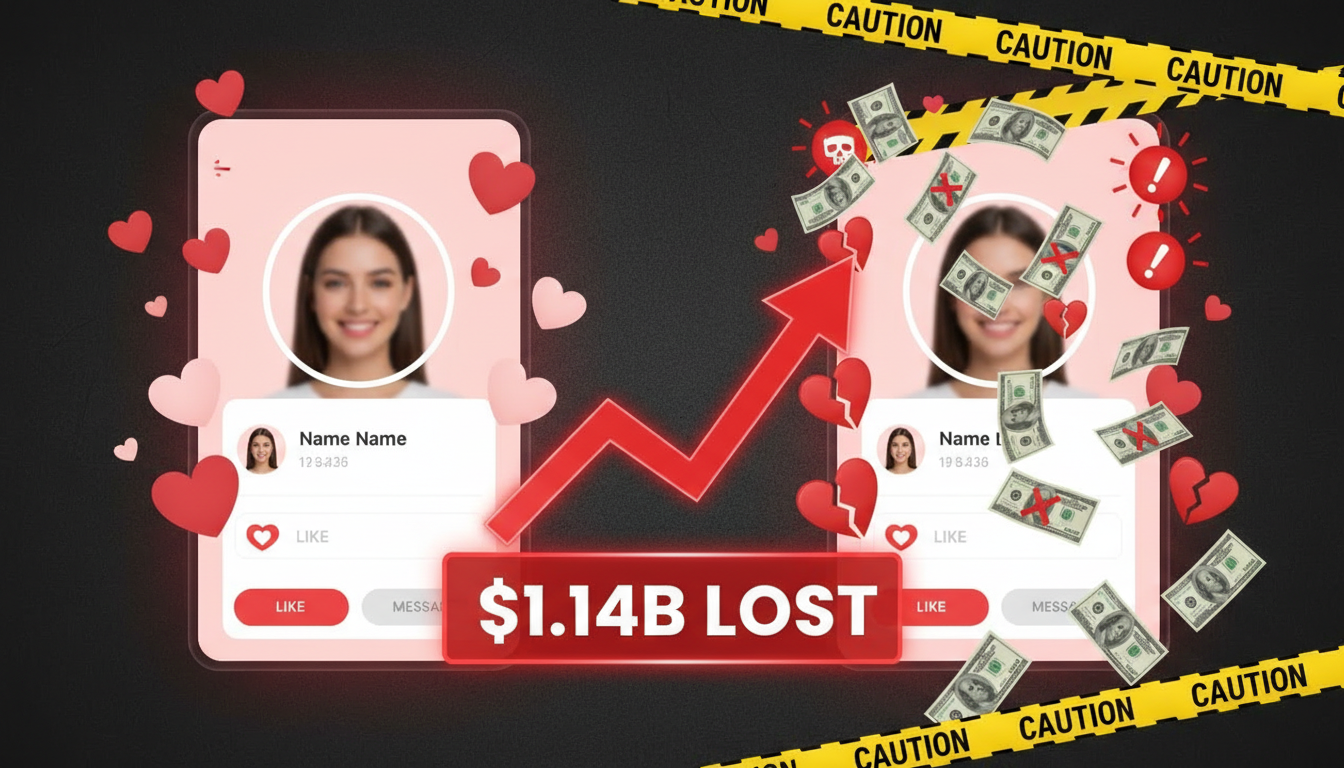
Romance scams. FraudGPT generates emotionally compelling scripts that adapt based on how a victim responds, producing follow-up messages that feel increasingly personal and genuine. This is one reason the average romance scam now runs 146 days before discovery and costs victims a combined $1.45 billion in 2025. The conversation feels real because it’s been engineered to feel real. If someone you met online seems almost too good at saying the right thing, run their profile through Social Catfish before the relationship goes any further.
Phishing texts and emails. Grammatically perfect, contextually accurate, and platform-specific, a fake USPS notice, fraudulent bank security alert, or spoofed IRS message generated by FraudGPT is significantly harder to catch than anything a human scammer could write. The days of spotting a scam by its typos are largely over.
Fake job offers. Professional-quality postings, recruiter emails, and onboarding communications built to pass as legitimate at every stage of the hiring process. Employment scam losses grew from $90 million in 2020 to over $501 million in 2024, and AI-generated content is a major driver of that increase.
Investment and crypto fraud. Entire fake investment platforms’ websites, pitch materials, performance reports, and the conversational scripts used to build trust beforehand were all generated to support pig butchering scams. Victims are often months into what feels like a genuine relationship before any financial ask appears.
Credential harvesting. Fake login pages and confirmation emails targeting banking, email, social media, and crypto accounts at scale are visually identical to the real thing and increasingly difficult to distinguish without checking the URL directly.
Name Search Examples
To get more accurate results, enter the full name including at least First name, Middle name and Last name.
Email Search Examples
Phone Search Examples
Username Search Examples
Address Search Examples
Start typing the initial part of the address and select from the addresses given dropdown afterward.
We Respect Your Privacy.
Why FraudGPT Attacks Are Harder to Spot
FraudGPT eliminates the signals people have traditionally relied on to identify scams:
- Bad grammar — gone. FraudGPT produces flawless text in any language, including highly localized phrasing that matches the target’s region and platform.
- Generic messaging — gone. It personalizes based on available data your name, employer, recent activity, or anything else that’s been scraped or purchased.
- Obvious templates — gone. Output varies with each generation, making pattern-matching detection significantly less effective.
- Amateur execution — gone. The skill floor is now zero. A first-time fraudster with a $200 subscription can produce attacks that match the quality of experienced cybercriminals.
The result is fraud that looks professional, feels personal, and evolves faster than most detection systems can keep pace with. Traditional advice, which looks for bad spelling, generic greetings, and suspicious links, still applies, but it catches far fewer attacks than it used to. Behavioral verification and identity confirmation have become the more reliable first line of defense.
How to Protect Yourself From FraudGPT-Powered Scams
Slow down on urgent requests. FraudGPT excels at generating pressure messages designed to make you act before you think. Any urgency around money, account verification, or personal information is the clearest signal to pause, regardless of how legitimate the message looks.
Verify the sender independently. Don’t use contact information from the message itself. Go directly to the organization’s official website and reach out through that. FraudGPT can clone a message’s appearance it can’t clone the organization’s actual contact infrastructure.
Don’t click links in unsolicited messages. Type addresses directly into your browser. FraudGPT-built phishing pages are visually convincing, but the URL is where they fail, and it’s the one thing you can check before clicking anything.
Enable multi-factor authentication everywhere. Even if a FraudGPT phishing message captures your password, MFA blocks the credential from being used without the second factor. This is the single most effective technical defense against credential harvesting attacks.
Check for behavioral mismatches. AI-generated content is grammatically flawless, but sometimes behaviorally off; the tone doesn’t quite match the stated situation, or the request doesn’t align with how the real organization actually operates. Trust your instincts when something feels slightly wrong, even if you can’t pinpoint why.
Verify people you meet online. Romance scams and investment fraud powered by FraudGPT depend entirely on trust built with someone you’ve never verified in person. Before that trust costs you anything, run their photo, username, phone number, or email through Social Catfish, which cross-references their identity against public records and social profiles to confirm whether the person behind the messages is real.
FAQ
FraudGPT is an AI chatbot built for cybercrime with no content restrictions. Unlike ChatGPT, it generates phishing emails, malware, and fake websites on demand, with no safety filters, no refusals.
On dark web marketplaces and Telegram, starting at $200/month or $1,700/year with escrow, customer support, and regular updates structured like a commercial software subscription.
Yes, and you probably already have. Any convincing phishing email or fake job offer you’ve received in the past two years may have been AI-generated. You can’t identify it by appearance alone.
No. It’s used in romance scams, fake job offers, crypto fraud, and phishing campaigns targeting individuals just as much as corporations.
Watch for responses that feel generic, emotional escalation that moves unusually fast, or persistent refusal to video call. Then, verify their photo, username, or contact details through Social Catfish to confirm the identity is real.
The Bottom Line
FraudGPT didn’t invent new types of fraud. It removed the skill barrier, eliminated the telltale signs of amateur execution, and put professional-grade attack tools in anyone’s hands for $200 a month.
The defenses haven’t changed. Slow down, verify independently, and confirm identity before extending trust. What’s changed is how much that last step matters. Social Catfish lets you verify anyone you’re dealing with online by photo, name, phone number, username, or email before the conversation goes somewhere it can’t come back from.
Name Search Examples
To get more accurate results, enter the full name including at least First name, Middle name and Last name.
Email Search Examples
Phone Search Examples
Username Search Examples
Address Search Examples
Start typing the initial part of the address and select from the addresses given dropdown afterward.
We Respect Your Privacy.