
 Multiple Faces Detected


 March 7th, 2026
The scam email used to be easy to spot. Bad grammar. Generic greeting. Suspicious link. You deleted it and moved on.
That version of the threat is gone.
In 2026, the phishing email in your inbox may reference your name, your employer, your current project, and a colleague you spoke to last week. The voice on the phone may sound exactly like your daughter. The video call with your CFO may be a real-time deepfake generated by a criminal on the other side of the world. And the person you have been talking to on a dating app for three months may be an AI-powered chatbot designed to extract everything you have.
AI-enabled fraud surged 1,210% in 2025. The FBI’s Internet Crime Complaint Center recorded $16.6 billion in cybercrime losses in 2024 alone, a 33% increase from the year before, and analysts project global losses from AI-enabled fraud will reach $40 billion by 2027.
Here is what the new attacks look like, and the specific steps that actually protect you.
If someone online is not who they claim to be, Social Catfish can help you find out. Search a name, photo, phone number, or email at Social Catfish before you trust them with anything that matters.
Name Search Examples
To get more accurate results, enter the full name including at least First name, Middle name and Last name.
Email Search Examples
Phone Search Examples
Username Search Examples
Address Search Examples
Start typing the initial part of the address and select from the addresses given dropdown afterward.
We Respect Your Privacy.
AI-Powered Phishing: The Email That Knows Too Much

Traditional phishing was a numbers game: send a million generic emails, catch a few hundred people. The tells were obvious: a misspelled bank name, a generic “Dear Customer,” and a link going nowhere recognizable.
AI has ended that era entirely. The 2025 Phishing Threat Trends Report by KnowBe4 found that 82.6% of phishing emails now contain AI-generated content. These are not emails that feel slightly off; they reference your actual job role, your colleagues by name, and your current projects, all harvested automatically from LinkedIn, company websites, and data breaches. A campaign targeting 800 accounting firms used AI-personalized emails referencing each firm’s specific state registration details, achieving a 27% click rate.
How AI phishing works:
- Scrapes your public profiles to build a detailed picture of your role, contacts, and recent activity
- Generates flawless, personalized emails in minutes 192x faster than a human attacker
- Eliminates every tell you were trained to spot: bad grammar, generic greetings, mismatched branding
- Can be launched for as little as $50, making it accessible to low-skill criminals
What to do:
- Treat any unsolicited request for credentials or payment as suspicious no matter how personalized it looks
- Verify financial requests by calling the sender on a number you already have, never one in the email
- Remember: an email that sounds exactly like your boss is not proof it is your boss
Voice Cloning: When the Voice on the Phone Is Not Who You Think
Voice cloning has crossed what researchers call the “indistinguishable threshold.” Research from McAfee found that just three seconds of audio can create a voice clone with an 85% accuracy match, and those three seconds are available to criminals on virtually everyone’s social media.
One in 4 Americans has already received an AI-generated deepfake voice call. In July 2025, a Florida woman received a call that sounded exactly like her crying, distraught daughter claiming she had been in a car accident. She wired $15,000 before calling her real daughter and realizing the entire call had been AI-generated. The FBI flagged similar virtual kidnapping scams demanding ransoms between $2,500 and $15,000.
How voice cloning works:
- Scammers harvest audio from TikTok, Instagram reels, YouTube videos, and voicemail greetings
- AI models generate a “voice fingerprint” from just seconds of clean audio
- The clone replicates intonation, rhythm, emotion, pauses, and breathing
- Scripts are engineered around urgency to bypass critical thinking
What to do:
- Set a family code word now a short phrase anyone can use to confirm identity in an emergency
- If you get a panicked call, hang up and call back on a number you already have
- If the caller cannot produce the code word, trust that answer over the voice
Deepfake Video: The Scam You Can See and Still Be Fooled By
Deepfake video scams surged 700% in 2025. The blurry edges, unsynced mouths, and lighting mismatches that once gave fakes away are largely gone. New AI models generate real-time interactive avatars that maintain facial consistency, behavioral mannerisms, and emotional reactions during live calls.
A 2025 iProov study found that only 0.1% of participants correctly identified all fake and real media they were shown. In 2024, a finance employee at engineering firm Arup transferred $25 million after a deepfake video call featuring AI-generated likenesses of senior executives, all fabricated, all convincing enough to fool a professional in a live meeting.
How deepfake video works:
- Real-time AI avatars can be deployed during live calls, not just pre-recorded clips
- Modern models replicate speech patterns, mannerisms, and emotional reactions not just a face
- Scammers combine deepfake video with stolen photos and AI chat to build fully layered fake identities
What to do:
- Ask the person to do something spontaneous and specific: hold up a handwritten note with a word you pick in the moment, or wave with their non-dominant hand
- Real-time AI avatars cannot adapt to unpredictable live prompts
- Treat seeing someone on camera as a starting point for verification, not an endpoint
Name Search Examples
To get more accurate results, enter the full name including at least First name, Middle name and Last name.
Email Search Examples
Phone Search Examples
Username Search Examples
Address Search Examples
Start typing the initial part of the address and select from the addresses given dropdown afterward.
We Respect Your Privacy.
AI-Powered Romance Scams: The Chatbot That Never Sleeps
AI has fundamentally changed the economics of romance scams. Previously, a scammer had to personally manage every conversation. Now, chatbots trained on large language models hold consistent, natural conversations around the clock, remembering prior exchanges, adapting in real time, and maintaining character indefinitely without any human involvement.
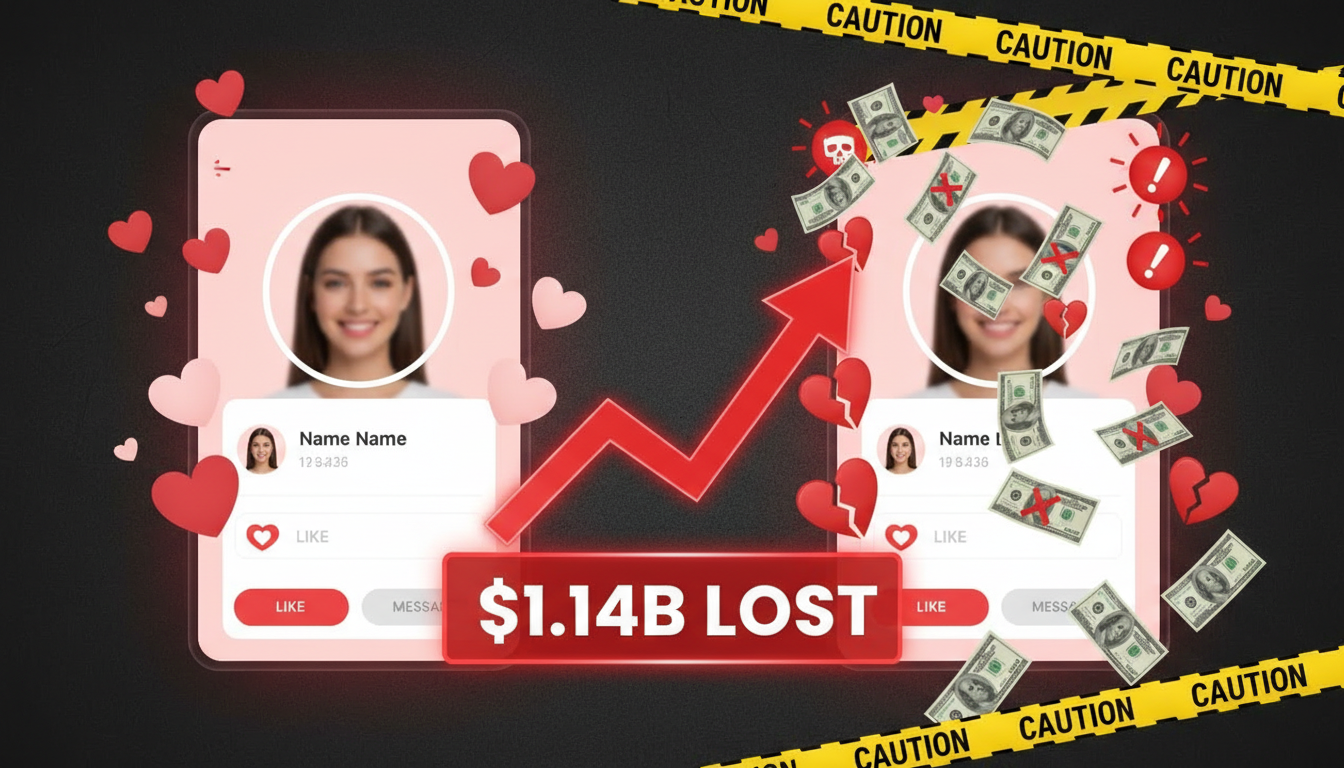
The FTC reports that romance scam losses topped $1.3 billion in 2024. Scammers layer in stolen photos, AI-generated profile images, and deepfake videos to satisfy requests for visual proof. The result is a person who appears to exist across photos, video, voice, and text, all consistent, all convincing, all completely fabricated.
Red flags of an AI romance scam:
- The connection feels intense and perfect unusually fast
- They are always unavailable to meet in person or do a spontaneous video call
- Their profile photos return no results in a reverse image search AI-generated images are designed to evade this
- A financial crisis emerges after weeks of emotional investment
What to do:
- Run their photos, name, phone number, or email through Social Catfish to flag stolen images, duplicate profiles, and contact details tied to known scam activity
- Request a spontaneous, unscripted video call and ask them to do something specific on camera
- Tell someone you trust about the relationship early AI-powered scammers rely on isolation just as human ones do
Hyper-Personalized Smishing: The Text That Knows Your Name

Smishing used to be easy to dismiss. “Your package is waiting.” “Your account has been flagged.” The generic phrasing was a giveaway.
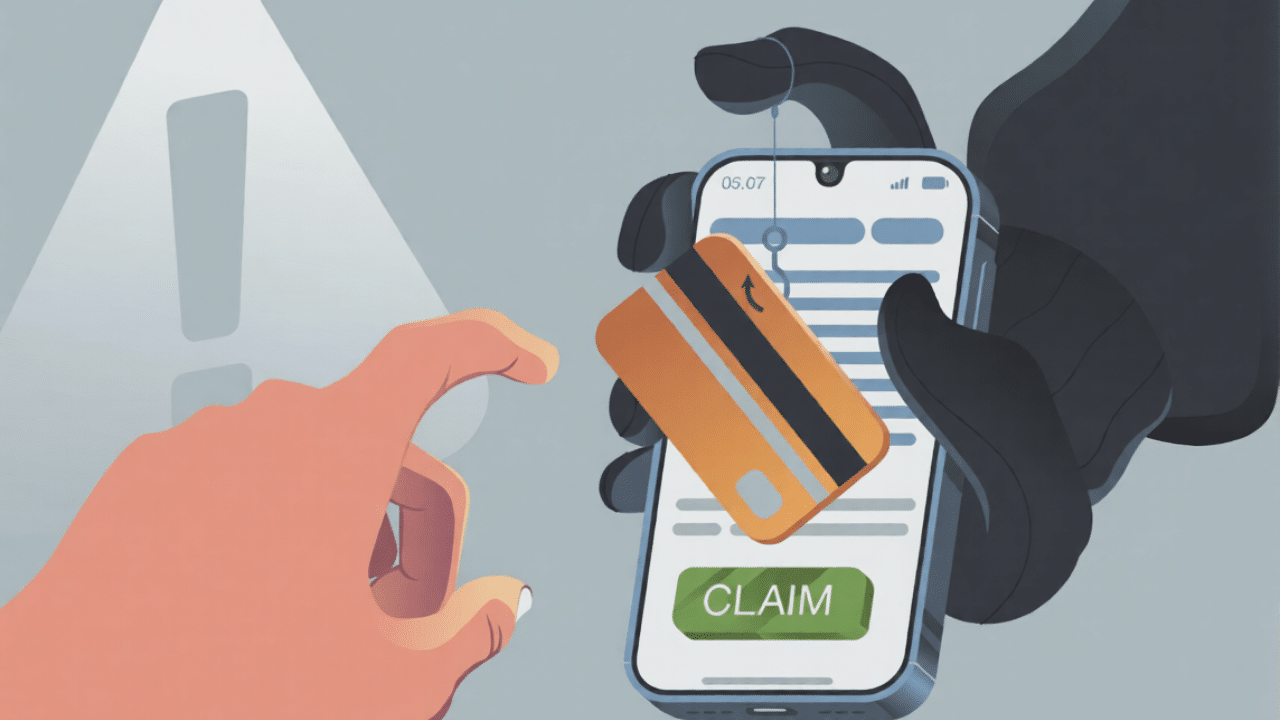
AI now enables scammers to incorporate your name, address, the last four digits of a card, a recent purchase, and your bank’s actual branding, all pulled automatically from data breaches being continuously mined and cross-referenced. Some major retailers already report receiving over 1,000 AI-generated scam calls per day.
What to do:
- Never click a link in an unsolicited text, no matter how accurate the personal details appear
- Go directly to the company’s official app or website instead
- Treat your correct personal details appearing in a scam message as a sign your data has been compromised, not that the message is legitimate
Protecting Your Identity Before the Scam Arrives
Most AI-driven scams start with one resource: your personal information. Reducing what is available reduces your exposure across every threat category.
Steps to protect yourself proactively:
- Lock down your audio footprint. Voice clones are built from public audio. Limit who can view your stories, reels, and video content on social media.
- Monitor your data breach exposure. If your email or phone number surfaces in a breach, assume it is already being targeted. Act before criminals do.
- Search your own identity. Social Catfish lets you search your name, email, or phone number to see what is publicly associated with your identity, the same information a scammer targeting you would already have.
- Use unique passwords and two-factor authentication everywhere. AI-powered credential stuffing runs stolen login combinations against hundreds of services simultaneously. Reused passwords are a skeleton key.
- Verify anyone you meet online before extending trust. A name, photo, email, or phone number search on Social Catfish can flag duplicate identities, stolen images, and contact details connected to known scam activity.
FAQ
Scams that use artificial intelligence voice cloning, deepfake video, AI chatbots, and automated personalization to deceive victims more convincingly than traditional fraud. They eliminate the human errors that once made scams detectable.
Often, you cannot based on voice alone. Set a family code word in advance and always hang up and call back on a number you already have when a call involves an urgent request for money.
Yes. Deepfake technology now supports real-time synthesis during live calls. Ask the person to do something spontaneous and specific, something a pre-programmed avatar cannot anticipate.
Yes. AI chatbots can maintain consistent romantic conversations 24/7 without any human involvement. If someone you met online has never been able to meet in person, run their details through Social Catfish.
Stop contact immediately. Report to the FTC at ReportFraud.ftc.gov and the FBI at IC3.gov. Contact your bank right away if money was transferred.
The Bottom Line
The rules of online trust have changed in ways most people have not caught up with yet. The email that looks right can be fabricated. The voice that sounds familiar can be synthetic. The face on the video call can be generated. The person who has been talking to you every day for weeks may be a language model running a script.
None of this means the internet is impossible to navigate safely. It means the habits that used to protect you, looking for bad grammar, recognizing a strange tone, and trusting a voice you recognize, are no longer enough on their own.
Verification now has to be deliberate. A family code word for emergencies, a callback policy for financial requests, and a habit of checking identities before extending trust to anyone you have only met online.
Search any name, photo, phone number, or email at Social Catfish and know exactly who you are dealing with before a scammer’s AI gets any further into your life.
Name Search Examples
To get more accurate results, enter the full name including at least First name, Middle name and Last name.
Email Search Examples
Phone Search Examples
Username Search Examples
Address Search Examples
Start typing the initial part of the address and select from the addresses given dropdown afterward.
We Respect Your Privacy.